
NHL Betting Odds Explained: How to Read Hockey Lines Like a Sharp
 Available in US
- The Anatomy of American Odds
- Converting Odds to Implied Probability
- How Sportsbooks Set Opening Lines
- The Dynamics of Line Movement
- The Vigorish and Why It Matters More Than You Think
- Reading Lines in Context
- The Goalie Factor in Hockey Odds
- Practical Applications for Your Betting
- Building Your Odds Analysis Routine
The first time you look at a sportsbook’s NHL page, the numbers can feel like a foreign language. Minus signs, plus signs, three-digit figures that somehow represent money you might win or lose. It looks complicated because, at first glance, it genuinely is. But here is the thing most guides will not tell you: understanding hockey odds is not about memorizing formulas or becoming a math wizard. It is about developing an intuition for what numbers actually mean, and that intuition comes faster than you might expect once someone explains it properly.
This is not going to be a dry tutorial filled with definitions you could find in any glossary. We are going to walk through how odds actually function in the real world of NHL betting, why they move, what those movements tell you, and how sharp bettors use this information to find edges that recreational bettors consistently miss. By the time you finish reading, you will look at betting lines differently. You will see the story they tell about public perception, sharp money, and where value might be hiding in plain sight.
Hockey betting operates on the same fundamental principles as other sports, but the NHL has quirks that make odds behave in ways that surprise people coming from football or basketball betting. The lower scoring nature of the sport, the outsized importance of goaltending, and the relative lack of mainstream attention all create a market that rewards bettors who take the time to truly understand what they are looking at.
Let us start with the basics and build from there, because even experienced bettors sometimes have gaps in their understanding that cost them money over time.
The Anatomy of American Odds
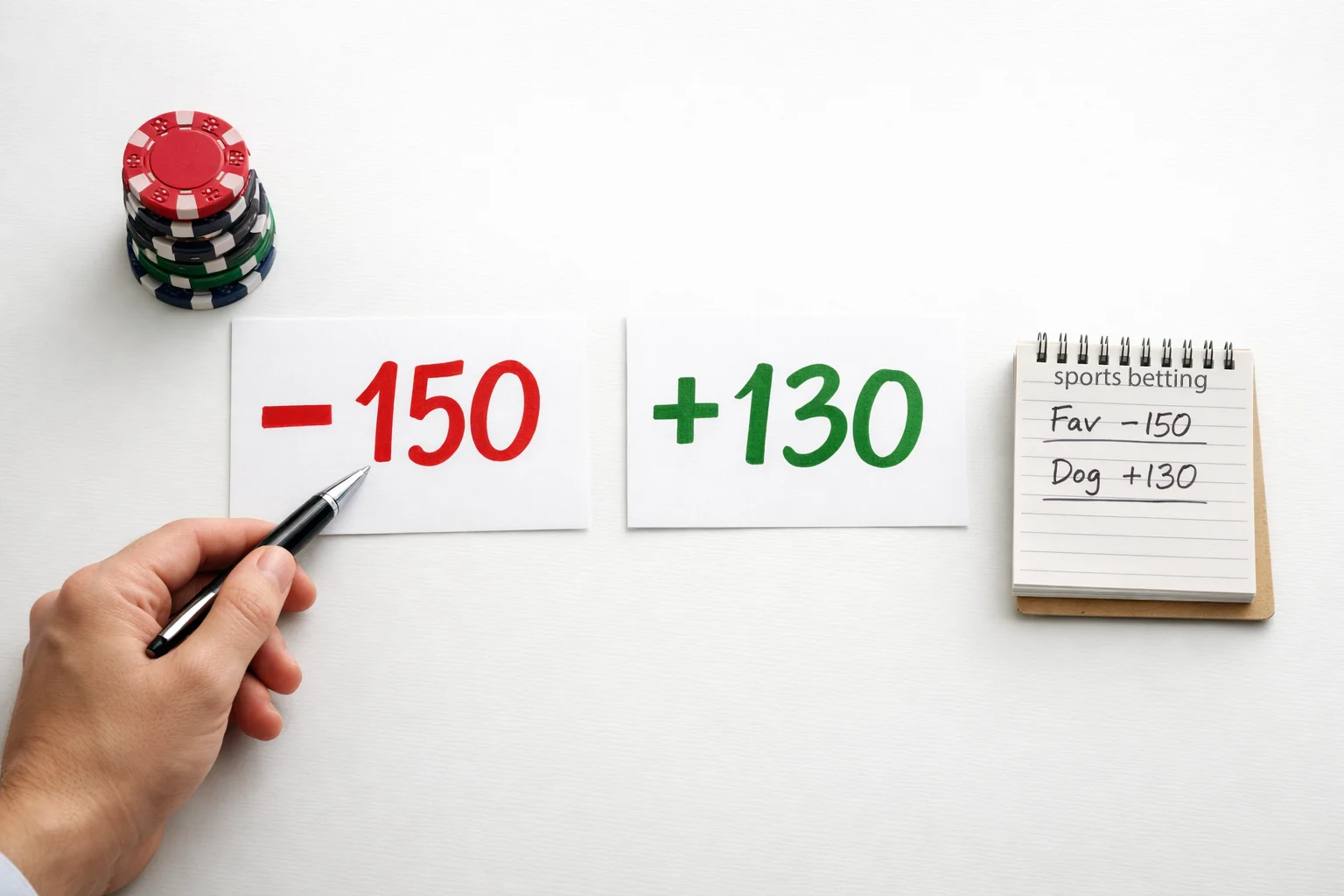
In North America, sports betting odds are typically displayed in what is called the American format. This system uses plus and minus signs followed by numbers, and once you understand the logic behind it, reading any betting line becomes second nature.
NHL betting odds explained at hockey bets.
When you see a negative number next to a team, that team is the favorite. The number tells you how much you need to wager to win one hundred dollars in profit. If the Toronto Maple Leafs are listed at minus one hundred fifty, you would need to bet one hundred fifty dollars to profit one hundred dollars if Toronto wins. The larger the negative number, the heavier the favorite. A team at minus three hundred is a much bigger favorite than a team at minus one hundred twenty.
The logic behind this makes sense when you think about it from the sportsbook’s perspective. They are essentially saying that Toronto winning is likely enough that they want you to risk more money for a smaller relative return. You are paying a premium to back the expected outcome.
Positive numbers work in reverse. They indicate the underdog and tell you how much profit you would earn on a one hundred dollar wager. If the Montreal Canadiens are plus one hundred thirty against Toronto, a one hundred dollar bet returns one hundred thirty dollars in profit if Montreal wins. The larger the positive number, the bigger the underdog. A team at plus four hundred is a significant longshot compared to a team at plus one hundred ten.
This asymmetry is intentional. Sportsbooks want action on both sides of every game. By adjusting the odds, they try to balance their books so they profit regardless of which team wins, collecting the margin built into the lines. When you see Toronto at minus one hundred fifty and Montreal at plus one hundred thirty, that gap between the two numbers represents the sportsbook’s edge, commonly called the vigorish or juice.
Understanding this fundamental structure is step one. The real insights come when you start to see what these numbers actually reveal about market perception and where discrepancies might exist.
Converting Odds to Implied Probability
Here is where casual bettors start to separate from those who take betting seriously. Every betting line carries with it an implied probability, a percentage that represents how likely the sportsbook believes that outcome is to occur. Learning to calculate and interpret these probabilities transforms how you evaluate bets.
For favorites with negative odds, the formula is straightforward. Take the absolute value of the odds, divide it by itself plus one hundred, then multiply by one hundred to get a percentage. A minus one hundred fifty favorite has an implied probability of sixty percent. The math works out to one hundred fifty divided by two hundred fifty, which equals zero point six, or sixty percent.
For underdogs with positive odds, you divide one hundred by the odds plus one hundred, then convert to percentage. A plus one hundred thirty underdog has an implied probability of approximately forty three and a half percent. One hundred divided by two hundred thirty equals roughly zero point four three five.
Now here is the insight that matters. When you add the implied probabilities of both sides of a bet, you will get a number greater than one hundred percent. This excess is the sportsbook’s margin. In our Toronto versus Montreal example, sixty percent plus forty three and a half percent equals one hundred three and a half percent. That three and a half percent overround is how the book makes money.
Why does this matter for you as a bettor? Because your job is to find situations where the true probability of an outcome exceeds the implied probability. If you believe Toronto actually has a sixty five percent chance of winning, but the line implies only sixty percent, you have found value. Betting plus expected value situations consistently is the only sustainable path to long-term profit.
This is not about guessing. It is about developing an analytical framework that helps you identify when the market has mispriced an outcome. Maybe the public is overreacting to a recent losing streak. Maybe a backup goalie announcement has not been fully priced in. Maybe you have information or insight the general betting public lacks. These situations create value, and understanding implied probability helps you recognize them.
How Sportsbooks Set Opening Lines

Before any betting happens, someone at the sportsbook has to decide what the initial odds should be. This process is more art than science, and understanding it gives you insight into how lines might move and where early value often exists.
Opening lines are typically set by a team of oddsmakers who analyze both teams extensively. They consider recent performance, historical matchups, home ice advantage, starting goaltenders, injury reports, travel schedules, and dozens of other factors. Using a combination of statistical models and subjective judgment, they arrive at a number they believe represents fair value for the game.
But here is what many bettors do not realize: opening lines are not designed to perfectly predict outcomes. They are designed to attract balanced action on both sides. Sportsbooks are in the business of managing risk, not predicting winners. An opening line that is slightly off can actually benefit the book if it draws action they want.
This creates opportunity. Early lines often contain the most value because they have not yet been sharpened by the market. When a line first posts, sharp bettors immediately analyze it and place wagers on any perceived mispricing. Their action moves the line toward efficiency. By the time the general public wakes up and starts betting, much of the early value has been corrected.
If you want to find value consistently, you need to either bet early before sharp action adjusts the line, or wait for public money to move the line in a direction that creates value on the other side. Both approaches require understanding how lines are set and what forces cause them to move.
The Dynamics of Line Movement
Lines move. From the moment they open until the puck drops, betting odds shift based on the action they receive. Learning to read and interpret line movement is one of the most valuable skills a sports bettor can develop.
When money comes in heavily on one side, sportsbooks adjust the line to encourage action on the other side and limit their exposure. If Toronto opens at minus one hundred forty and the book receives overwhelming action on the Leafs, they might move the line to minus one hundred fifty five or even minus one hundred sixty. This makes betting Toronto less attractive while making Montreal more attractive to subsequent bettors.
But not all money is created equal. Sportsbooks pay close attention to who is betting. When a known sharp bettor places a significant wager, the line often moves immediately and aggressively, even if the dollar amount is modest compared to recreational betting volume. The book respects sharp opinion because these bettors have proven track records.
This creates a phenomenon called reverse line movement, which sharp bettors watch closely. Imagine a scenario where seventy percent of the tickets and dollars are on Toronto, yet the line moves from minus one hundred forty to minus one hundred thirty. Public money overwhelmingly favors Toronto, but the line is moving against that money toward Montreal. Why? Because the smaller amount wagered on Montreal came from sharp bettors the book respects. The line movement is telling you that smart money disagrees with public perception.
Identifying reverse line movement requires access to betting percentage data and close attention to how lines change throughout the day. It is not a foolproof indicator, but it provides valuable context about where informed money is landing. When your own analysis aligns with what the sharp side appears to be betting, you can proceed with greater confidence.
The Vigorish and Why It Matters More Than You Think

We have already touched on the vigorish, but this concept deserves deeper exploration because it directly impacts your bottom line in ways many bettors underestimate.
The vig is essentially a tax on every bet you place. Standard American odds on point spreads and totals are typically minus one hundred ten on each side, which creates a combined overround of roughly four and a half percent. On moneylines, the vig varies but is always present. That Toronto minus one hundred fifty and Montreal plus one hundred thirty example includes roughly three and a half percent juice built in.
Here is why this matters practically. To break even betting minus one hundred ten odds, you need to win fifty two point four percent of your bets. Not fifty percent, which would be random chance, but fifty two point four. The vig means you need to be right more often than you are wrong just to stay even. Long-term profit requires winning at an even higher rate.
This might seem discouraging, but it actually clarifies what successful betting requires. You cannot just be slightly better than average. You need to develop genuine edge that overcomes the built-in house advantage. That edge might come from superior information, better analytical models, faster reaction to news, or identifying systematic market inefficiencies. But it has to come from somewhere.
Reducing the impact of the vig is one of the most practical ways to improve your results. Shopping lines across multiple sportsbooks is essential. If you can bet Toronto at minus one hundred forty five at one book instead of minus one hundred fifty five at another, you have meaningfully improved your expected value without changing your analysis at all. Over thousands of bets, these small differences compound into significant money.
Some sportsbooks offer reduced juice as a competitive advantage, charging minus one hundred five instead of minus one hundred ten. This might not sound dramatic, but it cuts your required win rate substantially. Serious bettors gravitate toward these books precisely because lower vig means more profit over time.
Reading Lines in Context
Numbers alone do not tell the whole story. The same odds can mean very different things depending on context, and developing the ability to read between the lines separates proficient bettors from true experts.
Consider two games where the home team is minus one hundred forty. In one game, it is the Colorado Avalanche hosting the San Jose Sharks. Colorado is a legitimate Stanley Cup contender while San Jose is rebuilding. The minus one hundred forty reflects Colorado’s talent advantage mitigated slightly by San Jose’s potential to steal a game on any given night.
In the other game, the Carolina Hurricanes host the Tampa Bay Lightning at the same minus one hundred forty. These are two elite teams with comparable talent. The line reflects home ice advantage and perhaps recent form more than any fundamental talent gap.
Same odds, completely different stories. How you approach these games should differ based on what the line represents. The Avalanche game might be a situation where the public correctly identifies the better team, making value harder to find. The Hurricanes game might offer more opportunity because the matchup is closer and small factors could swing perceived value.
Time of season matters too. Early season lines are often softer because sportsbooks have less data on how teams actually look this year. A team that made significant roster changes might be mispriced for weeks until the market calibrates. Late season lines tend to be sharper because there is an entire season of data informing them, plus bettors have had months to identify patterns.
Playoff betting is another context entirely. Lines tighten because sportsbooks know the increased betting volume brings sharper action. The books themselves sharpen their analysis. Public interest spikes, which can create value on underdogs when casual money floods in on popular favorites. Understanding how context shapes line behavior helps you identify where opportunities are most likely to exist.
The Goalie Factor in Hockey Odds

No discussion of NHL betting odds is complete without addressing goaltending, because no other sport has a single position that influences lines as dramatically.
See also the NHL prop betting guide.
When starting goaltenders are announced, lines often move significantly. A team might open at minus one hundred thirty with their starter expected, then shift to minus one hundred ten when the backup is confirmed. This movement reflects the market’s assessment of how much the goaltending change impacts win probability.
Sharp bettors pay intense attention to goalie announcements because getting ahead of these moves can capture value. If you correctly anticipate a backup start before the market adjusts, you can bet the opponent at more favorable odds. Conversely, if you expect the starter and the line reflects backup expectations, you might find value on the original favorite.
Tracking goalie rotations throughout the season gives you an edge here. Most teams follow predictable patterns, especially around back-to-back games. The starter almost never plays both games of a back-to-back. Teams with early games often announce their starter the night before. Paying attention to these patterns lets you anticipate line movements and position accordingly.
Advanced goalie metrics also inform line reading. A team’s backup might have a poor reputation but strong recent numbers, or vice versa. The market often overreacts to name recognition rather than current form. If you track metrics like save percentage, goals saved above expected, and high-danger save percentage, you can identify when the market’s goalie adjustment is larger or smaller than it should be.
Practical Applications for Your Betting
Theory is valuable, but profitable betting requires putting knowledge into practice. Here are frameworks for applying everything we have discussed.
Start by establishing a baseline approach to odds analysis. Before betting any game, calculate the implied probabilities for each side. Compare these to your own assessment of true probability. If there is no discrepancy favoring your side, do not bet. Discipline in walking away from neutral situations is underrated but essential.
Track line movement throughout the day. Note where lines open and where they close. Over time, you will develop intuition for typical movement patterns and will more easily spot unusual shifts that warrant investigation. Keep a log of games where reverse line movement appeared and track the outcomes. This builds your personal database of evidence about whether these signals are reliable.
Shop lines aggressively. Open accounts at multiple sportsbooks and check all of them before placing any wager. The difference between minus one hundred forty and minus one hundred fifty might seem small, but it represents meaningful expected value over time. Make line shopping a habit rather than an occasional practice.
Pay attention to timing. If you have opinions on games early, consider betting before sharp action adjusts the lines. If you prefer to see how lines develop, wait for public money to potentially create value on the less popular side. There is no universally correct timing, but understanding the tradeoffs helps you make intentional choices.
Finally, maintain realistic expectations. Understanding odds thoroughly does not guarantee profit. It gives you the tools to identify value, but variance remains significant in the short term. Even the sharpest bettors experience losing weeks and losing months. The edge from superior odds analysis plays out over hundreds and thousands of bets, not handfuls. Patience and discipline are as important as analytical skill.
The betting market for NHL games is not perfectly efficient, but it is efficient enough that casual approaches fail over time. Treating odds as information rather than just numbers transforms your relationship with betting. You stop gambling and start investing, making calculated decisions based on expected value rather than hunches or rooting interests. That shift in mindset, more than any single piece of knowledge, is what separates successful bettors from the recreational majority who fund the sportsbooks’ profits.
Building Your Odds Analysis Routine
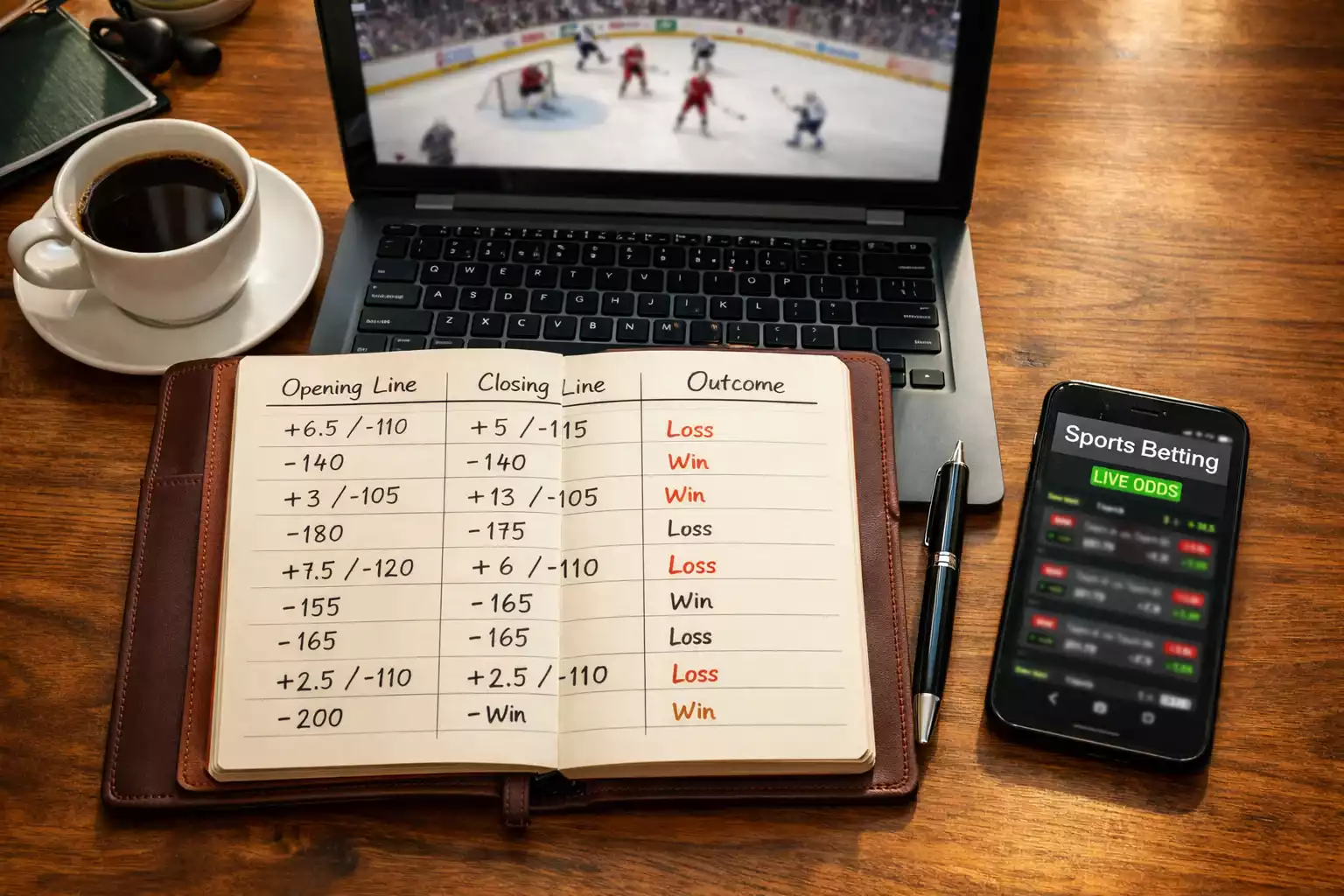
Developing a consistent routine for analyzing odds takes your betting from occasional hobby to structured practice. The most successful hockey bettors follow similar patterns, checking lines at specific times and tracking data in organized ways.
Morning line checks matter because overnight movement often reveals sharp action from bettors in different time zones or those who bet late after games conclude. When you see significant movement from where lines closed the previous night to where they open the next morning, that movement typically reflects informed opinion rather than public noise.
Creating a simple tracking spreadsheet takes minimal effort but pays substantial dividends. Record the opening line, closing line, your bet if you made one, and the outcome. Over a season, patterns emerge. Maybe you consistently find value on certain types of games. Maybe your edge is strongest when lines move in particular directions. Without data, these insights remain invisible. With data, you can optimize your approach based on evidence.
The psychological discipline of routine also helps manage the emotional swings inherent in betting. When you follow the same process regardless of recent results, you avoid the trap of chasing losses or becoming overconfident after wins. The process becomes the focus rather than any individual outcome, which is precisely the mindset that leads to long-term success.
Understanding NHL betting odds is not a destination but an ongoing journey. Markets evolve. Sportsbooks adjust their models. Sharp bettors find new edges and old ones disappear. Staying curious, continuing to learn, and refining your approach based on results keeps you competitive in a landscape that never stops changing. The bettors who thrive are those who treat odds analysis as a skill to develop over time rather than a formula to memorize once and apply forever.
